
QIBEBT Co-Hosts Biomanufacturing iMAPS Training, Using Metaramanomics to Overcome Industrial Strain Development Bottlenecks
More than 70 representatives from the food, pharmaceutical and chemical industries joined a focused training on high-throughput industrial microbial strain development and process control, co-hosted by the Industrial Microbiology Committee of the Chinese Society for Microbiology and the Qingdao Institute of Bioenergy and Bioprocess Technology, Chinese Academy of Sciences (QIBEBT, CAS), and co-organized by the China Industrial Microbial Culture Collection Management Center (CICC) and Qingdao Single-Cell Biotech. Co., Ltd. The training, held on September 24 in Beijing as a satellite event of the 13th Industrial Microbiology Conference (2025 IMic), addressed two long-standing challenges in industrial microbiology: slow strain improvement and difficult real-time process monitoring.
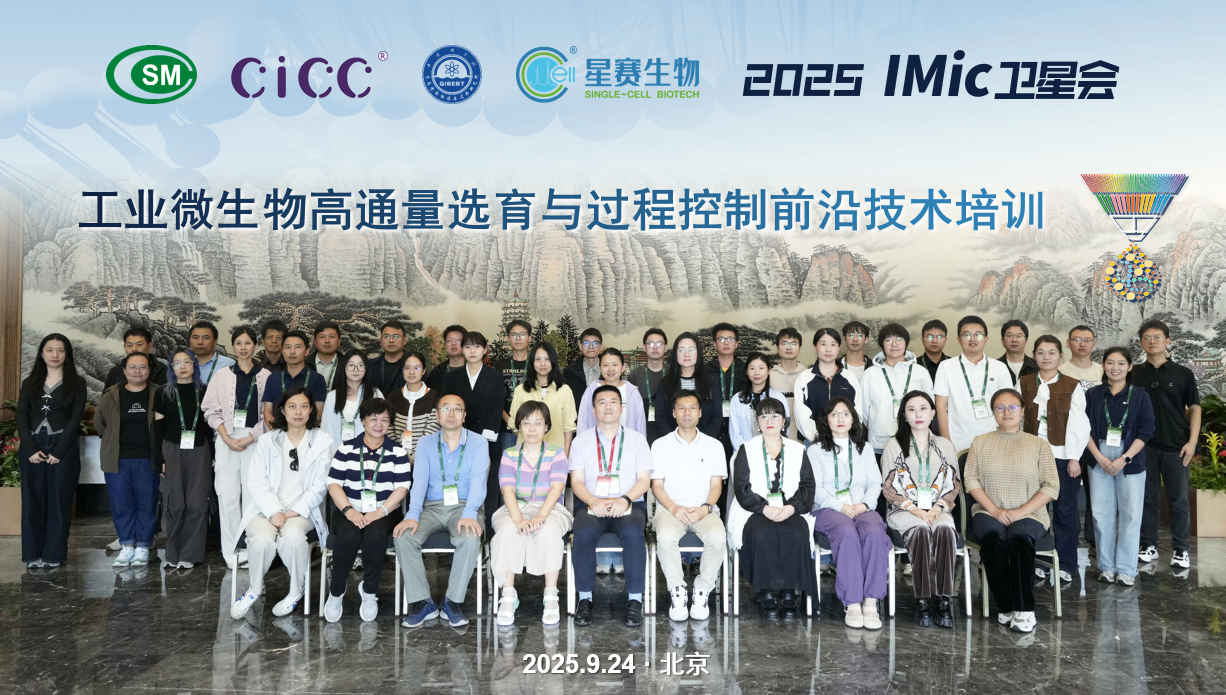
In opening remarks, CICC Director and Deputy Director of the China National Research Institute of Food & Fermentation Industries, Prof. YAO Su, stated that industrial microbiology is entering a phase where breakthroughs at the single-cell level are both possible and urgently needed. She emphasized that single-cell analysis can deliver order-of-magnitude gains in production efficiency while enabling real-time, online process safety and quality control.
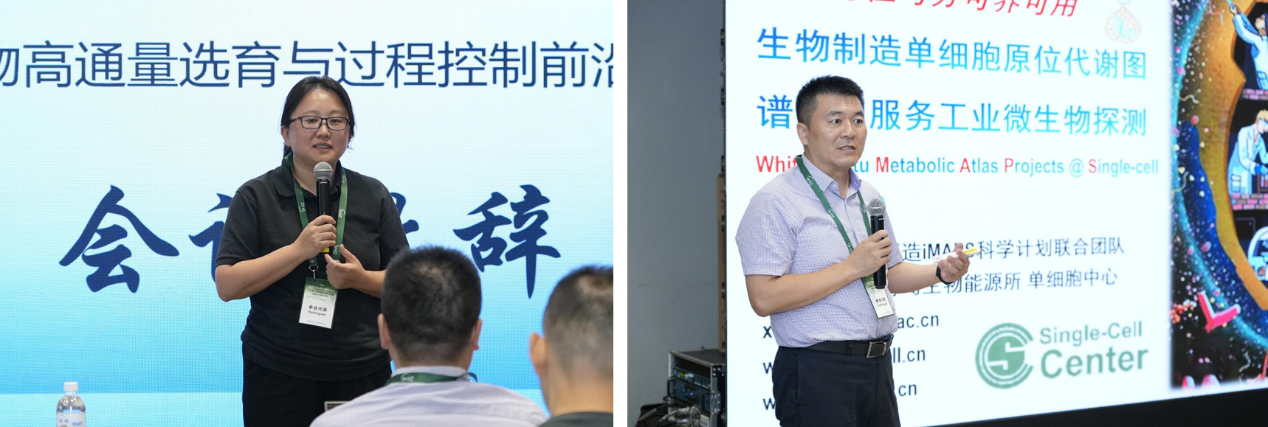
Prof. XU Jian from Single-Cell Center at QIBEBT outlined the “bio-manufacturing iMAPS” vision — building a Single-Cell In-situ Metabolic Atlas for industrial biotechnology. XU noted that China urgently needs core capabilities to monitor, sort, cultivate and apply living microbial cells based on their in-situ metabolic functions, in real time. He highlighted single-cell Raman spectroscopy and related platforms as strategic tools for next-generation biomanufacturing, with direct relevance to national biosafety and industrial innovation.
Technical modules showcased multiple proprietary platforms developed at QIBEBT. Associate Prof. WANG Xixian presented the pDEP-DLD-RACS Raman flow cytometric sorting system, which departs from the traditional “culture first, then screen” model. By combining dielectrophoretic cell focusing with precise Raman-based metabolic readout, the system sorts live single cells at throughputs up to 2,000 events per minute with over 90% accuracy, and can run stably for more than 10 hours. According to WANG, this platform — described as the only commercialized Raman flow cytometric cell sorter — cut a months-long DHA high-producing strain screening workflow down to 10 days, yielding strains with 58% higher production than wild-type, with results already reported in PNAS.
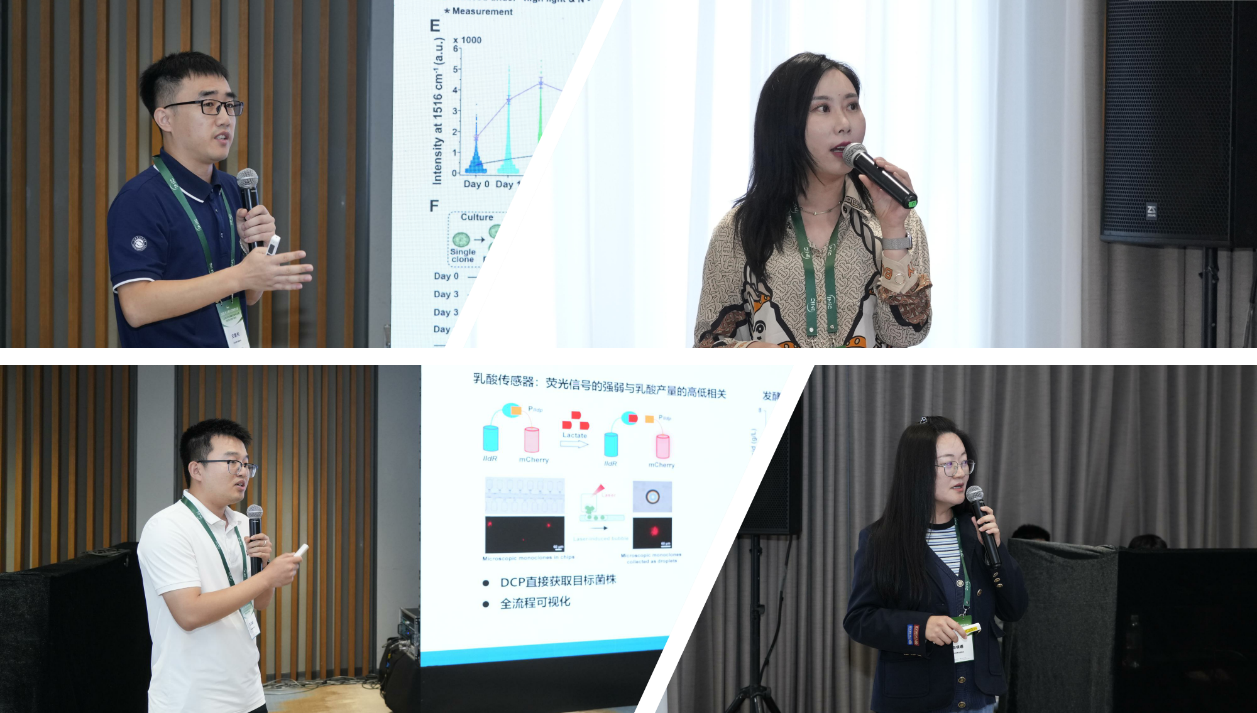
DCP (Digital Colony Picker) technology, presented by Dr. DIAO Zhidian, was introduced as a “grow while screening” workflow. The system cultures single cells in 16,000 microchambers, applies AI-based image analysis to evaluate growth, productivity and stress tolerance, and then retrieves specific target clones using laser-induced bubble extraction. DIAO showed cases including lactic acid overproducers with a 17.6% production boost, as well as filamentous fungi screening that avoids droplet fusion caused by hyphal puncture. Associate Prof. ZHANG Jia described SCIVVS, a probiotic quality control workflow that measures viable count, activity, identity and traceability in 4–5 hours — roughly 20 times faster and at 10% of the cost of conventional methods — and is already being translated into industry standards with leading companies. ZHANG also demonstrated Raman-based monitoring of polyhydroxyalkanoate (PHA) fermentation in 12 minutes (versus the traditional two-day assay) and applications in gut microbe isolation.
Senior Engineer ZHENG Xiaoshan provided an overview of “Meta-Ramanomics,” including Raman spectroscopy principles, non-destructive metabolic phenotyping and sorting, and matched instrument platforms. These tools have already supported gene mining in lipid-producing microalgae and rapid identification of phosphorus-removing bacteria in wastewater.
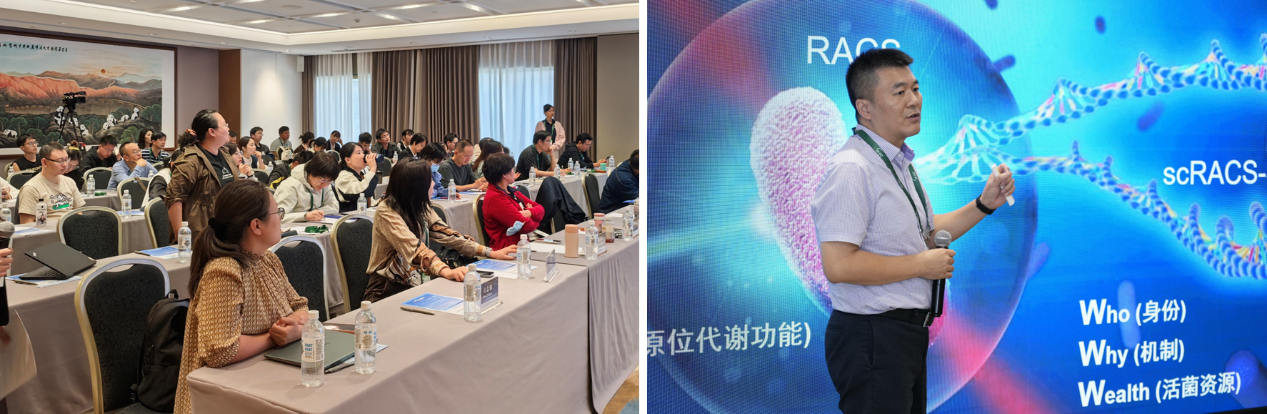
In a dedicated iMAPS discussion session, XU Jian emphasized that real-time “health check and sorting” of live single cells is central to unlocking new microbial resources for industrial use. Participants agreed on the need to develop quantitative standards for metabolic activity in complex microbial communities and to align those standards with industrial quality control. The organizers stated that the iMAPS international program aims to build a globally distributed network of “metabolic sensors + strain prospectors + ecological restorers,” enabling high-value strains to be discovered, recovered, and deployed on demand for green biomanufacturing.
