
iMAPS Consortium Releases First Quarterly Newsletter
The iMAPS (In-situ Metabolic Atlas Projects @ Single-cell) Consortium has released the first issue of its quarterly newsletter, outlining recent progress in network expansion, scientific outputs and community activities across its global consortium. The Qingdao Institute of Bioenergy and Bioprocess Technology (QIBEBT) of the Chinese Academy of Sciences is among the key participating institutions in the initiative.
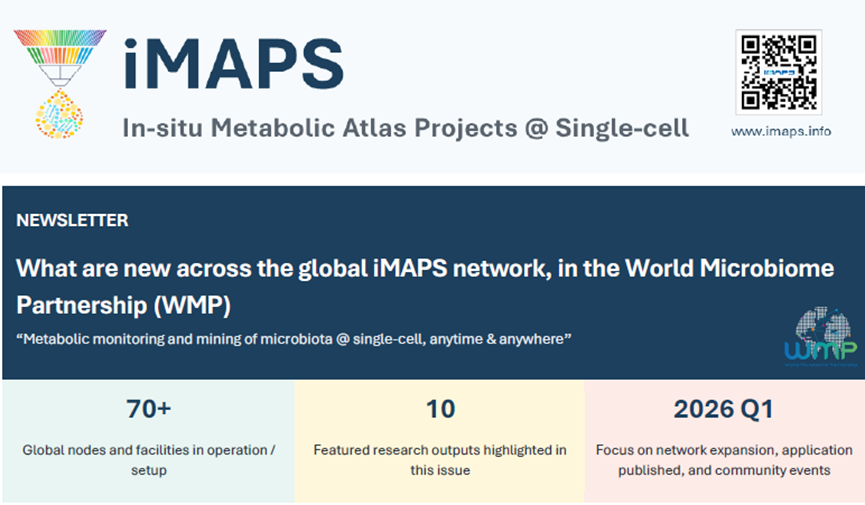
According to the newsletter, iMAPS aims to build a global network of Microbiome Metabolic Observatories at single-cell resolution to better profile, decode and mobilize microbial metabolism for applications in health, agriculture, environmental restoration, climate resilience and biomanufacturing. The initiative integrates metaramanomic instrumentation, AI-assisted phenotyping, and downstream single-cell cultivation and sequencing workflows to detect, sort and recover microbial cells with targeted in-situ metabolic functions directly from complex samples.
By early 2026, the iMAPS network had expanded across Asia, Europe and North America, with more than 70 global nodes and facilities in operation or under setup. The first newsletter also highlighted 10 featured research outputs spanning antifungal susceptibility testing, Raman-based microbial classification, coral microbiome reconstruction, probiotic science, wastewater biotechnology and industrial fermentation, reflecting the growing application breadth of the platform.
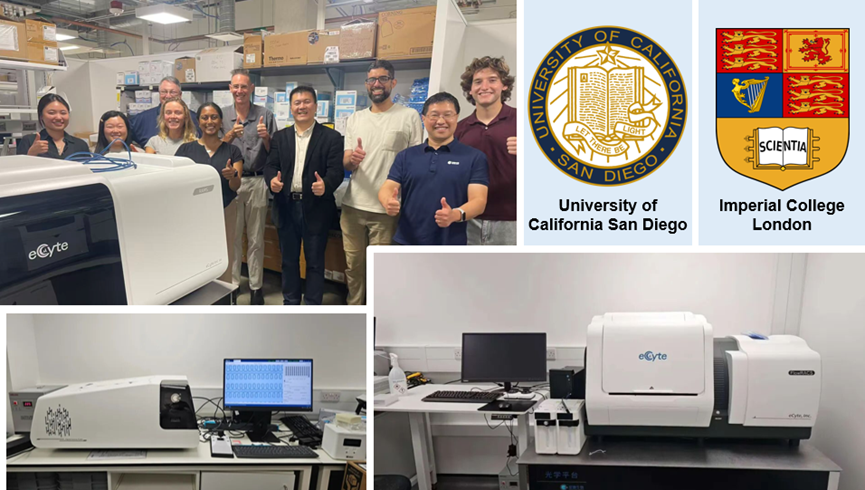
The newsletter summarized several recent milestones. In early March, the SynBio iMAPS platform at Imperial College London was expanded through the installation of a Digital Colony Picker alongside an operating FlowRACS platform. On March 11, an iMAPS platform was established at the Center for Microbiome Innovation at the University of California San Diego. Later, on March 27, the Oral iMAPS Initiative was launched at IADR 2026 in San Diego, bringing together teams from The University of Hong Kong, the University of California San Diego, QIBEBT, West China School/Hospital of Stomatology of Sichuan University, Peking University School of Stomatology, Qingdao Stomatological Hospital, Qingdao Women and Children’s Hospital, and the ADA Forsyth Institute.
The newsletter also announced a series of workshops and symposia planned for 2026 in China and abroad, covering geological microbiology, synthetic biology, ocean and soil microbiomes, metrology, traditional Chinese medicine and biomanufacturing. These activities are expected to further strengthen international collaboration and scientific delivery within the iMAPS network.
